




Related Post
What Labs Miss Without Magnetic Rack for RNA Isolation
2025-12-24Magnetic Rack for RNA Isolation is more than a simple stand on your bench. It is a magnetic tool that pulls down RNA-bound beads and holds them in place while you remove or add liquids. This small step supports many big workflows: viral RNA extraction, next-generation sequencing library prep, liquid biopsy research, and high-throughput diagnostic screening. In many landmark studies, magnetic bead – based RNA methods helped labs scale up sample processing and improve consistency, especially when spin columns were too slow or fragile. Today, biotech companies and core facilities rely on magnetic racks to keep RNA workflows clean, fast, and reproducible. Yet some teams still treat the rack as a generic accessory, not a critical part of the protocol. That quiet assumption comes with hidden costs that only show up in your data later. So what exactly are labs missing without a dedicated magnetic rack – and how much does it really matter?

(Magnetic Beads (microRNA & Oligo Purification) – BioDynami)
Everyday Friction in RNA Extraction that No One Tracks
On paper, most RNA extraction workflows look solid. The kit is validated, the SOP is written, and everyone knows the steps. But when you walk to the bench, the reality is different.
Technicians still fight with small volumes in narrow tubes. Beads are not always easy to see. Supernatant sometimes goes out too fast. A small flick of the wrist can disturb the pellet. None of these moments feel dramatic on their own, but together they slowly damage data quality.
Without a dedicated Magnetic Rack for RNA Isolation, tiny errors stack up:
•Pipetting becomes guesswork when bead pellets are hidden or uneven.
•RNA loss creeps in during supernatant removal or wash steps.
•Contaminants stay in the tube because separation is incomplete.
You may not notice it on a single plate of samples. But you see it in the long term: unexpected variation in RNA yield, extra repeats, and datasets that are harder to explain to collaborators or QA.
Another invisible issue is the magnetic field itself. If the rack does not provide a uniform, stable magnetic field across all wells or tubes, beads collect at different speeds or in different patterns. That means the same protocol can give different results on the left and right sides of the same rack. Coefficients of variation rise, and reproducibility quietly drops.
Human factors play a role too. A non-ergonomic rack forces staff to bend over the bench, twist tubes, or maintain awkward grips for long periods. High-throughput labs feel this acutely. What looks like a small inefficiency becomes hours of extra work per week, plus a higher risk of fatigue-related mistakes.
In short, labs without a well-designed Magnetic Rack for RNA Isolation are often paying a hidden “error tax.” They spend time troubleshooting instead of generating data, and they repeat experiments that should have worked the first time.
How a Magnetic Rack for RNA Isolation Changes the Game
A modern Magnetic Rack for RNA Isolation is built around high-performance permanent magnets that create a strong yet gentle magnetic field. The physics is complex, but the benefits at the bench are very simple.
When the magnetic field is uniform, beads travel quickly and settle into clear aggregation zones on the tube wall or bottom. You can see exactly where your beads – and your RNA – are. That visibility gives you confidence when you aspirate supernatant, add wash buffers, or elute your final product.
Instead of “hoping” the pellet stayed in place, technicians can see that it did. The result is:
•Higher recovery from each extraction
•Less material lost during washing
•Tighter CVs between batches and between operators
•Shorter wait times for beads to separate
A good rack is also designed around real lab workflows. Tubes are easy to insert and remove. Positions feel intuitive. The rack sits firmly on the bench, so you are not chasing it across the surface each time you change a plate. This simple ergonomic comfort reduces strain, especially when you process dozens or hundreds of samples in one run.
Flexibility is another quiet advantage. Many premium racks support working volumes from just a few microliters up to around 50 mL. You can use them with 0.2 mL PCR tubes or strips, standard 1.5/2.0 mL microcentrifuge tubes, and larger 15 or 50 mL conical tubes. One solution covers small screening experiments and larger prep work without constant equipment changes.
Although we focus here on RNA, a Magnetic Rack for RNA Isolation rarely stays limited to one protocol. The same hardware can support:
•DNA extraction and clean-up
•Library clean-up after PCR or other enzymatic reactions
•Protein purification using magnetic bead affinity systems
•Cell enrichment or depletion with magnetic beads
That means a single investment improves multiple workflows, not just one. Over time, this reduces cost per run and simplifies training because staff learn one piece of hardware that they can use across many applications.
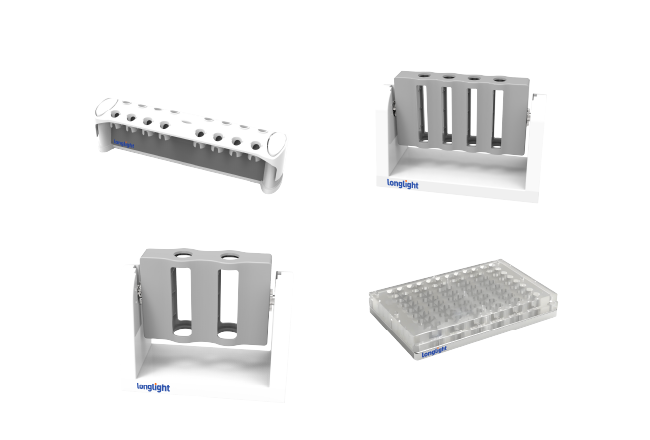
��� Call-to-Action: Before you change protocols again, look at your separation hardware. A well-designed Magnetic Rack for RNA Isolation could be the fastest way to reduce errors and unlock higher daily throughput.
Signs It‘s Time to Upgrade Your Magnetic Rack
How can you tell whether your current setup is good enough or actively limiting your results? A few practical questions help clarify the picture.
Do different operators get noticeably different yields from the same RNA isolation kit? If yes, your process is probably too sensitive to individual technique. A rack with a more uniform magnetic field and clearer bead aggregation zones can reduce this operator-to-operator gap.
Has hands-on time increased as your sample numbers grew? When you are processing, for example, several plates in a row, waiting for beads to settle or carefully “rescuing” unstable pellets can quickly add up. A more efficient Magnetic Rack for RNA Isolation accelerates these steps and supports smoother high-throughput operation.
Are you repeating runs because of unclear QC results, strange outliers, or inconsistent library quality? While many factors affect QC, poor separation can be a major one. Incomplete bead capture, bead clumping, or residual contaminants all show up later as noise in your data.
When you start looking for a new rack, focus on a few core criteria:
•Magnetic performance – Strong enough for fast separation, but not so aggressive that beads clump or become difficult to resuspend.
•Consistency – Stable performance with tight CVs over many batches and across all positions on the rack.
•Ergonomics – A design that feels comfortable and intuitive in daily use, reducing strain and errors.
•Compatibility – Support for the tube formats and working volumes you actually use, from small PCR tubes to larger microtubes or conicals.
Visibility is worth calling out on its own. Racks that make bead zones easy to see give technicians immediate feedback. They know when the separation step is complete, when it is safe to aspirate, and how much residual liquid is acceptable. This visual control helps protect precious samples and makes onboarding new staff significantly easier.
In the end, a magnetic rack is not just a block that holds tubes next to magnets. It is part of your lab’s quality infrastructure. When it works well, your data are cleaner, your workflows are smoother, and your team spends less time firefighting and more time analyzing meaningful results.
��� Call-to-Action: Take one of your current RNA workflows and imagine it with clearer bead visibility, faster separation, and more comfortable handling for your team. If that sounds like the direction your lab needs to go, now is a good moment to evaluate an upgraded Magnetic Rack for RNA Isolation from Longlight Technology and bring your day-to-day work in line with the quality of your science.
