

Related Post
The Importance of Accurate Nucleic Acid Quantification to the NGS Industry
2025-11-19Targeted-specific Fluorescent Dyes bind only to the molecules you intend to measure. They turn true signal into clear light and mute the rest. These dyes power precise PCR quantification, NGS library QC, clinical diagnostics, and single-cell studies. They appear in international research from large genome projects to high-impact cancer and virology papers. Labs choose them to detect low DNA and RNA with confidence and speed. The idea is simple, yet the impact is big. What makes these dyes different in day-to-day PCR work? And how much accuracy do they really add when samples are scarce? Keep on reading.
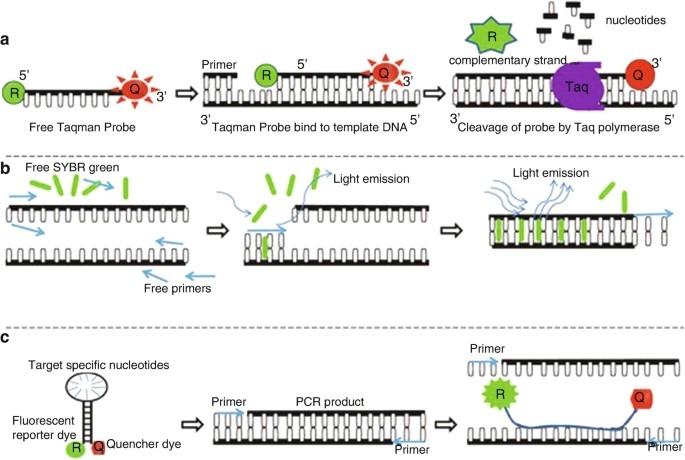
(Real-Time PCR: Advanced Technologies and Applications | SpringerLink)
Why Precision In PCR Quantification Still Slips
Every PCR success story begins with an accurate measurement of nucleic acid. Yet this “simple” step is where many projects stall. Trace DNA vanishes under noise. Carryover salts and residual phenol skew readings. UV absorbance inflates numbers because it sees everything – nucleic acids, proteins, even leftover reagents. One shaky estimate becomes a cascade: off-target Cq values, wasted master mix, and repeat runs that eat up days.
This is exactly where Targeted-specific Fluorescent Dyes earn their keep. Because they bind selectively to the molecules you intend to measure – dsDNA, ssDNA, RNA, or even proteins – they lift signal above background and ignore common interferents. The outcome is a crisp, high signal-to-noise read that translates into cleaner reaction setup and fewer surprises on the back end. For anyone building NGS libraries or running large PCR panels, that extra specificity is the line between a smooth schedule and a mounting backlog.
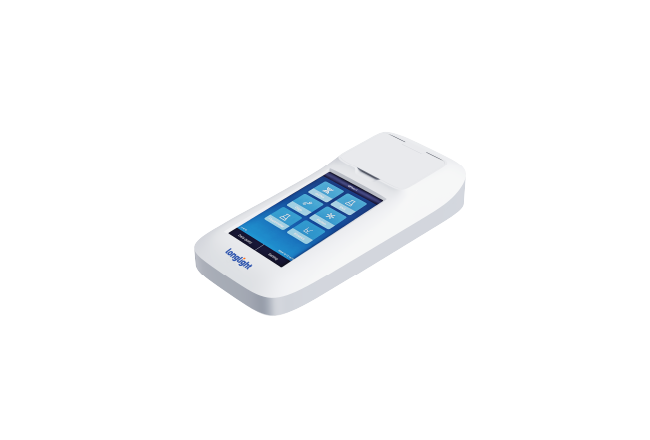
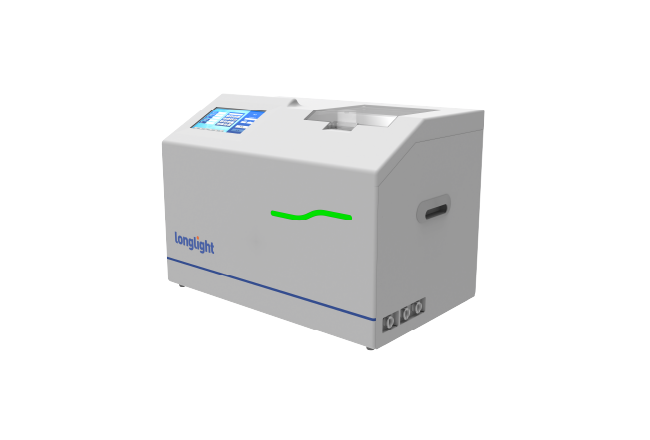
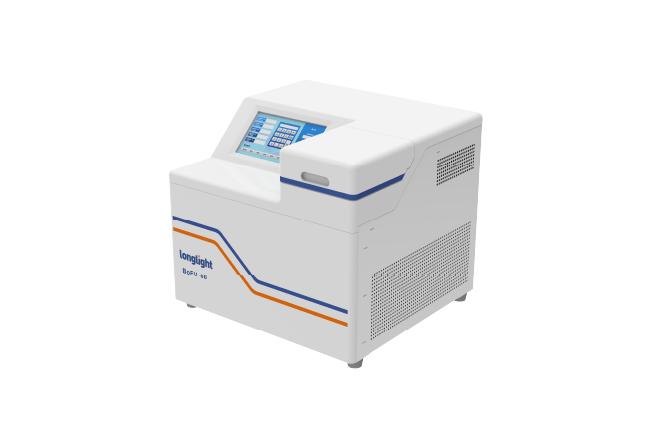
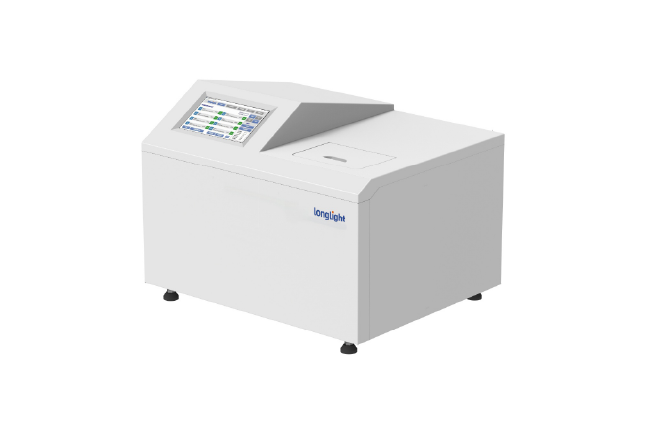
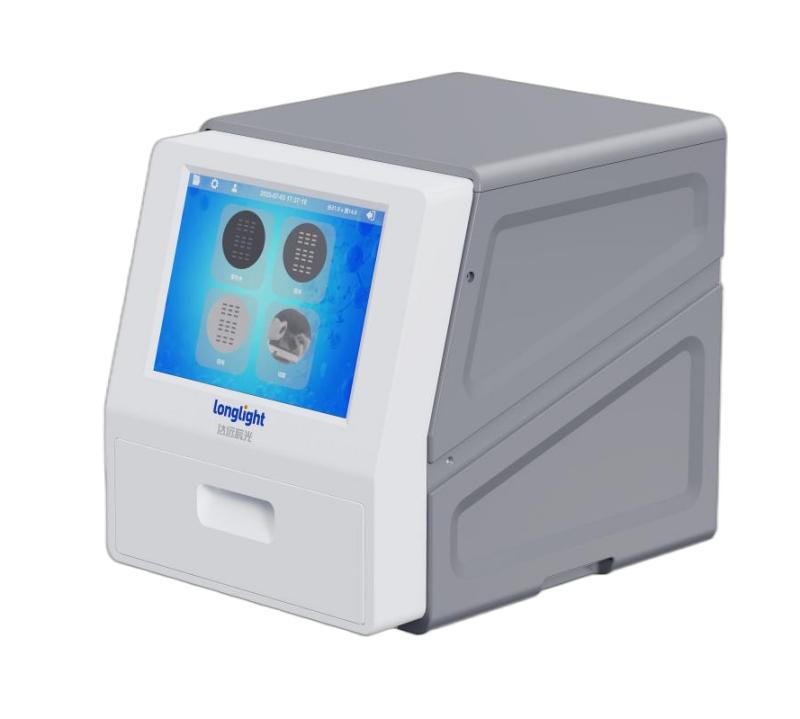
From a manufacturer’s point of view, precision has to arrive without friction. If quantification drains sample, takes too long, or locks you into one proprietary kit, teams will skip it or “estimate and hope.” Our approach is simple: pair Targeted-specific Fluorescent Dyes with a compact fluorometer that needs only 1 – 20 μL and returns an accurate number in about 3 seconds. In other words, quantification that fits your pace – not the other way around.

How Longlight Turns Fluorescent Signals Into Reliable Decisions
Longlight Technology builds instruments around lab realities: tiny elution volumes, crowded benches, and new staff who need to get productive on day one. Our fluorescence detection platform reads micro-volume samples after a short incubation and reports a stable number fast enough to keep plates moving. You get a usable result without sacrificing material you still need for PCR, Sanger checks, or library prep.
✅ What Sets The Experience Apart
• Sensitivity That Protects Rare Material
Detect dsDNA down to 0.01 ng/μL so low-input samples stop falling below the line. Degraded RNA, precious clinical inputs, and small elutions finally become measurable, not guesswork.
• Micro-Volume Efficiency
Preserve your workflow flexibility with 1–20 μL per read. When extraction volumes are tight, every microliter matters.
• Speed Without Shortcuts
A streamlined mix-and-read protocol, automated calculations, and a stable calibration routine deliver answers in seconds, not minutes. Your queue keeps moving.
• Real Specificity
Use selective assays for dsDNA, ssDNA, RNA, and proteins to avoid the overestimation that plagues UV-only checks. Measure the analyte you intend – nothing else.
• Open Reagent Choice
Choose the fluorescence assays that fit your SOP. Our platform is open, so you are not limited to a single brand of consumables.
Behind the scenes, matched excitation/emission filters and a high-efficiency light source help maintain a broad, linear dynamic range. The touch interface is designed for quick adoption – useful for labs with rotating staff or shared instrumentation. The net effect: less training, fewer repeat reads, and more predictable PCR setup day after day.
✅ Where It Fits In Your Workflow
• Template Normalization: Standardize inputs before PCR to rein in Cq variance and reduce outlier wells.
• NGS Library QC: Confirm library concentration at low nanogram levels so pooling is accurate and re-runs drop.
• Method Development: Compare extraction methods or cleanup steps with a sensitive, selective readout that reflects true gains.
What Targeted-Specific Fluorescent Dyes Mean For Precise PCR Quantification
When people say “precise quantification,” we translate that into outcomes you can feel: tighter replicate agreement, fewer failed reactions, and turnaround times that match the plan on your whiteboard. Targeted-specific Fluorescent Dyes make this possible by lifting your measurement above noise, even when concentration is low. That improvement flows straight into better normalization, cleaner amplification curves, and downstream analytics you can trust.
Consider the common pain points we hear from customers – and how a fluorescence-first approach addresses them:
• Low-Input Samples: Instead of up-concentrating and risking loss, measure accurately at low nanogram per microliter levels and proceed with confidence.
• Uncertain UV Reads: Replace absorbance-based estimates with selective fluorescence so contamination does not masquerade as DNA.
• Time Pressure: Results in roughly 3 seconds mean quantification becomes a quick check, not a bottleneck.
• Sample Conservation: With 1–20 μL per read, you keep enough material for repeats or alternative assays if needed.
From an operations perspective, the benefits compound. When every plate starts with reliable inputs, you spend less time chasing anomalies and more time generating data. Reagent budgets stretch further because repeat runs fall. Project timelines stabilize because you remove one of the biggest sources of variability.
As a manufacturer, Longlight Technology focuses on the details that make this reliability routine: stable optics, intuitive software, and an open stance on assay chemistry. We know methods evolve – PCR panels expand, protocols shift, and new dye systems arrive. An instrument that plays well with multiple chemistries protects your process against change while keeping your team in control.
✅ Practical Tips To Get The Most From Fluorescence Quantification
• Calibrate On Arrival, Verify Periodically: A brief two-point check keeps results aligned and prevents drift from creeping into your SOP.
• Match The Assay To The Analyte: Use dsDNA-specific dyes for double-stranded measurements; switch to RNA-selective chemistries when your template demands it.
• Treat Quantification As A Step, Not A Hurdle: Build it into your routine – right before normalization – so it becomes the guardrail that protects every downstream reaction.
Final Thoughts
Ready to make precise PCR quantification the most dependable part of your day? Talk to a Longlight specialist for a quick workflow review, or request a bench demo to see how micro-volume fluorescence and Targeted-specific Fluorescent Dyes can stabilize your PCR results from the very first run.
Bottom Line: With selective chemistry, micro-volume handling, and near-instant readouts, precision stops being a bottleneck. With Longlight Technology, it becomes your lab’s standard operating advantage.
