

Related Post
How Laboratory Ultrasonic Disruptor Simplifies Complex Sample Prep
2025-12-10Laboratory Ultrasonic Disruptor technology is quietly changing how scientists treat difficult samples before analysis. It uses focused high-frequency sound waves to break cells, shear DNA, and fragment chromatin in a controlled way. Unlike traditional probe sonicators, it works without direct contact with the sample, which helps reduce contamination and overheating. Today, many genomics labs use this type of system for DNA and RNA shearing in NGS workflows, ChIP-seq chromatin fragmentation, and processing FFPE tissue for downstream sequencing. These tools are also appearing in protein research, cancer studies, and large clinical projects where reproducibility really matters. More and more high-impact papers now rely on focused ultrasonication to standardize their sample preparation. But how does a Laboratory Ultrasonic Disruptor actually simplify daily, complex sample prep at the bench – and is it really different from the instruments you already use? That’s what we’ll explore in the following sections.

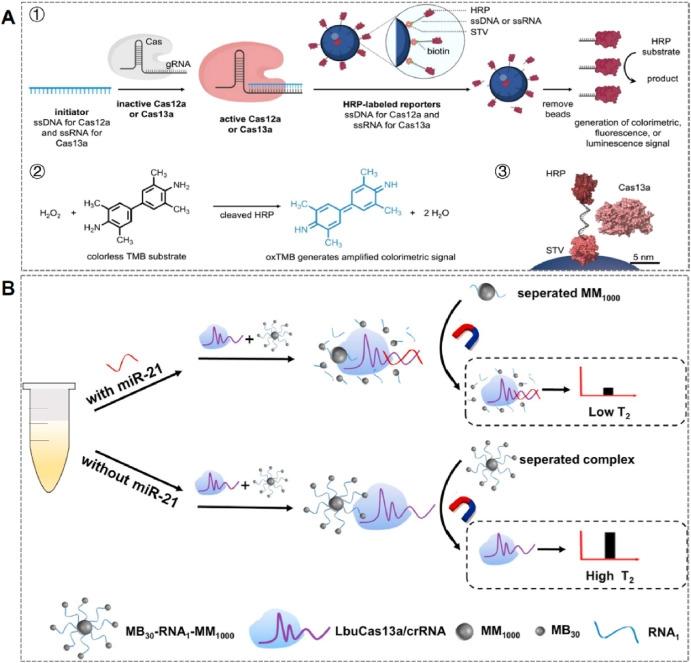
(Noncontact Ultrasonics – an overview | ScienceDirect Topics)
Why Sample Prep Still Slows Down Modern Labs
Ask anyone working at the bench which step they trust the least, and sample preparation will show up high on the list. Protocols look neat on paper, but day-to-day execution is full of variables: who is running the experiment, how carefully the probe is cleaned, how long the sample was on ice, how busy the lab is that day.
With traditional probe-based ultrasonic systems, the metal tip goes straight into the sample tube. That simple design creates a lot of hidden trouble:
•Cross-contamination is hard to avoid, especially when handling rare or expensive samples.
•Tips need constant cleaning and maintenance, and even then it’s difficult to keep everything perfectly consistent.
•Ultrasonic power generates heat, which can damage DNA, RNA, proteins, or chromatin before you even notice.
•The noise level can be high enough that people instinctively avoid running the instrument unless they have to.
Temperature control is another weak point. In many labs, the “solution” is to put tubes on ice or move them between cooling devices mid-run. That takes extra time, and every manual step introduces more variability. Two people can follow the same SOP and still end up with very different results.
A Laboratory Ultrasonic Disruptor with focused, non-contact ultrasound is designed to remove these headaches from your daily routine. Instead of relying on operator skill to “rescue” a protocol, it makes the process more automated and controlled, so experiments become easier to repeat and scale.
How Laboratory Ultrasonic Disruptor Creates Cleaner, Colder, Quieter Workflows
A modern Laboratory Ultrasonic Disruptor is not just an upgraded sonicator. It combines several ideas – focused energy, non-contact processing, and integrated cooling – to address the main pain points that researchers face.
- Non-Contact Ultrasound for Sensitive Samples
In a focused ultrasonicator, the acoustic energy passes through a coupling medium and is concentrated directly onto the sample. The hardware never touches your tubes or wells. That single change has a big impact:
✅No probe inside the sample, so the risk of carryover and contamination is greatly reduced.
✅No metal abrasion, loose particles, or worn tips ending up in your experiment.
✅More stable conditions for low-volume and high-value samples, where every microliter counts.
Because the probe never touches the sample, this approach is ideal for workflows such as NGS library prep, DNA/RNA shearing, and chromatin shearing in ChIP-seq. When fragment size really matters, minor contamination or unstable power delivery can force you to repeat the entire experiment. By using a Laboratory Ultrasonic Disruptor, you lower that risk and protect your spend on samples, reagents, and downstream sequencing.
- Smart Cooling Built into the Instrument
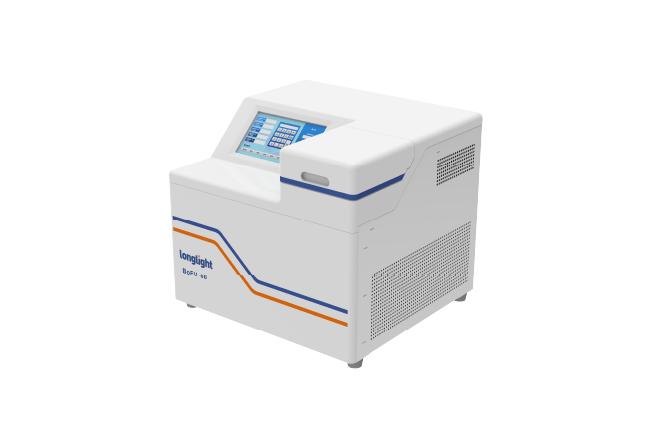
A Laboratory Ultrasonic Disruptor also brings temperature control into the instrument itself. It replaces ice buckets and noisy external chillers with a built-in semiconductor refrigeration system. As a result, the sample chamber stays at a steady low temperature throughout the run, a sensitive sensor network tracks any thermal change, and there is no need for extra cooling hardware or complicated tubing around the device.
For temperature-sensitive applications – genome fragmentation, nucleic acid extraction, protein work – this level of control removes the constant worry about heat damage. You’re not guessing whether your sample got too warm halfway through the run; the system is actively managing it for you.
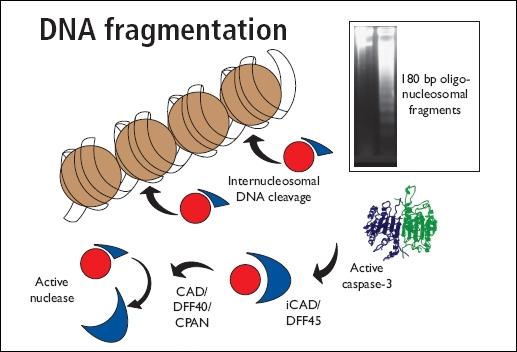
(DNA Fragmentation Antibodies | Bio-Rad)
- The figure illustrates DNA fragmentation during apoptosis. Chromatin is wrapped around nucleosomes, shown as DNA coils on histone cores. Activated nuclease, CAD/DFF40/CPAN, cleaves internucleosomal DNA into regular fragments. CAD is normally inhibited by iCAD/DFF45, depicted as a complex of red and blue shapes. Active caspase-3 cleaves iCAD, releasing active CAD nuclease. This nuclease then cuts the linker DNA between nucleosomes, generating characteristic 180 base-pair oligonucleosomal fragments. A gel image on the right displays these fragments as a DNA ladder, confirming the orderly, stepwise cleavage pattern typical of programmed cell death. This cascade tightly regulates genome dismantling in dying cells precisely.
- Designed for Real Lab Space, Not Showrooms
Most labs do not have unlimited space, and most scientists do not want another loud, complicated box sitting next to them. Focused Laboratory Ultrasonic Disruptor platforms are usually built with real lab constraints in mind.
Typical benefits include:
✅Quiet operation, so you can run the instrument in an open lab without needing separate soundproofing.
✅An integrated control system, reducing the need for an external computer.
✅Built-in cooling, so you don’t have to make room for a separate chiller.
The user interface is generally simple: place your samples, enter a few parameters, and start the run. This lowers the training barrier, which is important for labs where students, technicians, and new team members rotate frequently. When the system is straightforward to use, you get fewer mistakes, fewer repeated runs, and more consistent results across the team.
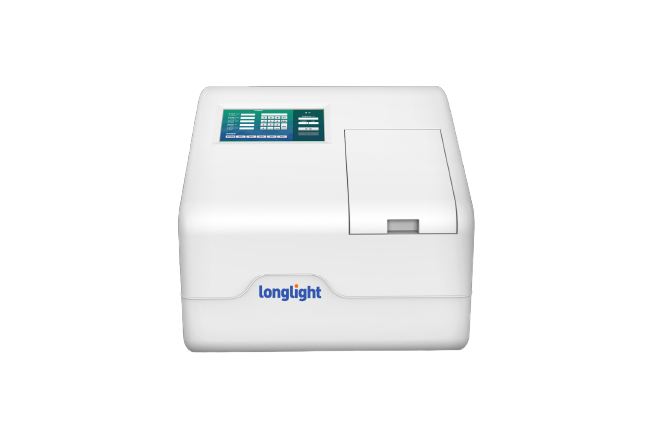
Where Laboratory Ultrasonic Disruptor Fits in Your Workflow
A Laboratory Ultrasonic Disruptor is not limited to a single niche protocol. Because it offers controlled, reproducible energy delivery and reliable temperature management, it can support a wide range of workflows across molecular biology and genomics.
In many labs, you’ll see focused ultrasonication used for:
•DNA, RNA, and chromatin shearing for library preparation
•Genome fragmentation in next-generation sequencing (NGS)
•Processing and deparaffinization of FFPE samples
•Cell and tissue disruption for nucleic acid or protein extraction
•Fragmentation and homogenization of different biological tissues
ChIP-seq is a good example of where this technology shines. The method depends on controlled chromatin shearing to study how proteins interact with DNA across the genome. If your fragmentation is inconsistent, your downstream sequencing data suffers. A stable, well-controlled ultrasonic process helps deliver more uniform shearing, which supports cleaner and more interpretable results.
Many suppliers also bundle Laboratory Ultrasonic Disruptor systems with related reagents and consumables, such as nucleic acid extraction kits, library preparation kits, and precast gels. Building a full workflow around a single platform helps reduce variability between steps and simplifies troubleshooting. Instead of wondering whether the problem came from the instrument, the reagent, or the protocol, you work within a more integrated ecosystem.
Ready to Rethink Your Sample Preparation Strategy?
If your lab is still dealing with unpredictable fragment sizes, multiple reruns of critical samples, overheated DNA or proteins, or ultrasonic devices that everyone avoids because of the noise, it might be time to review your setup.
Introducing a focused Laboratory Ultrasonic Disruptor into your workflow can help you:
•Simplify complex and multi-step sample preparation protocols
•Protect temperature-sensitive molecules throughout the process
•Reduce contamination risk through non-contact sample handling
•Improve reproducibility and standardization between operators and across projects
Call to action:
If you are looking for more reliable genomic data and smoother day-to-day lab work, consider arranging a hands-on evaluation of a Laboratory Ultrasonic Disruptor. Run your own comparison against your current methods, measure the impact on sample quality, and see how much time and variability you can remove from your sample prep pipeline.
