

Related Post

ChIP: Revealing How Proteins Control Genes: Starts With One Simple Question
2026-02-25ChIP: Revealing How Proteins Control Genes is the practical method scientists use to answer a question that sits at the center of modern biology: which proteins are sitting on which DNA regions, in real cells, under real conditions? If you are new to gene regulation, it helps to think of DNA as a library and regulatory proteins as "readers" that open specific pages at specific times. ChIP (Chromatin Immunoprecipitation) is how we capture that moment and identify the pages.
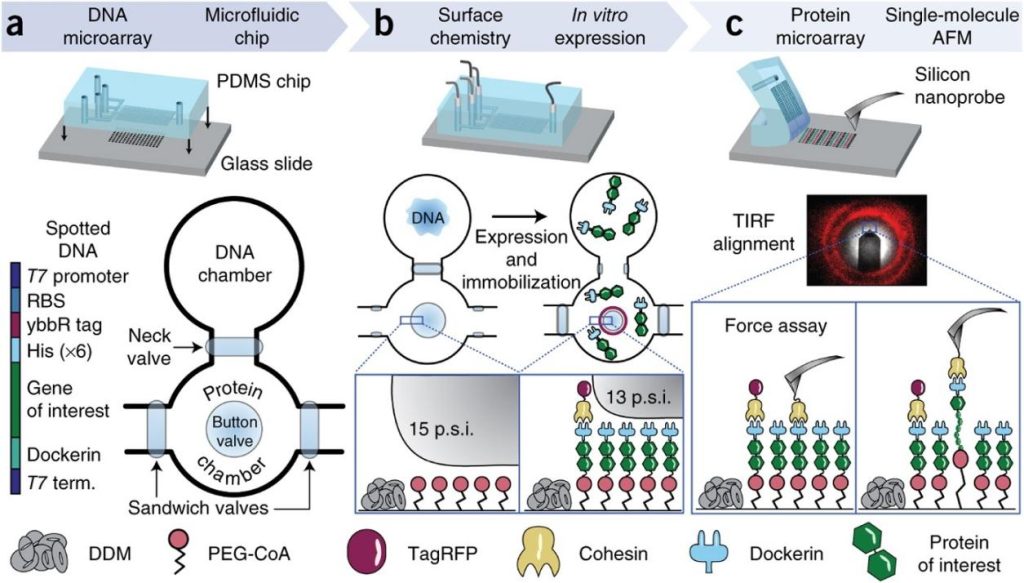
From genes to protein mechanics on a chip | Nature Methods
At Longlight Technology, we manufacture and support core workflow tools used in chromatin research—from sample handling essentials to enrichment and downstream detection options—so new teams can start with a clean, repeatable path, and experienced teams can scale with confidence.
What ChIP Actually Measures and Why It Matters
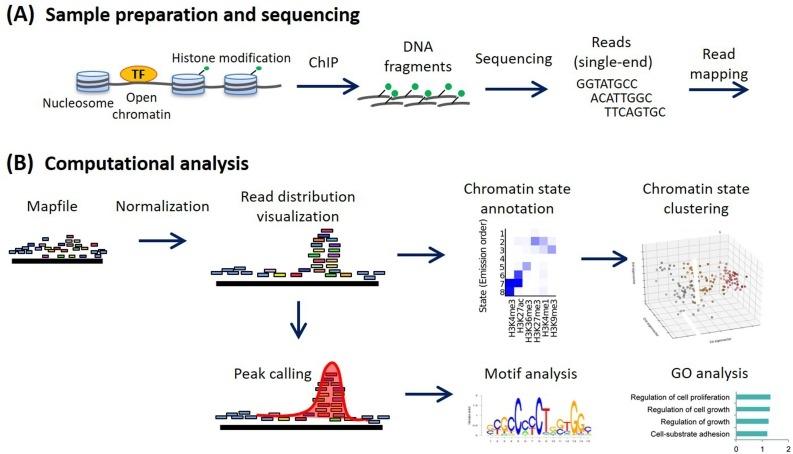
In plain terms, ChIP tests whether a protein is physically associated with a specific DNA region inside the cell. It is widely used for transcription factors, co-factors, and histone modifications, because these are the "switches" that decide whether genes are active, paused, or silent. A standard ChIP workflow usually includes crosslinking (for many targets), chromatin fragmentation, antibody-based enrichment, DNA purification, and readout by qPCR (targeted) or sequencing (genome-wide).
This is why ChIP: Revealing How Proteins Control Genes is more than a lab technique—it is a decision tool. It helps researchers:
✓ Confirm whether a suspected regulator binds a promoter or enhancer
✓ Compare binding changes before/after treatment or stress
✓ Map histone marks that correlate with active or repressed chromatin states
✓ Build evidence for mechanisms in epigenetics, oncology, immunology, and development
The Core Workflow in Six Steps
Most beginners succeed faster when they treat ChIP as a chain of "must-not-break" steps, not as one single experiment. Here is the practical sequence behind ChIP: Revealing How Proteins Control Genes:
• Fix (optional but common): Many ChIP protocols use reversible crosslinking, often with 1% formaldehyde for ~10 minutes, then quenching (commonly with glycine).
• Lysis/chromatin prep: Standardize nuclei/chromatin yields for consistency.
• DNA shearing: Fragmentation controls resolution and enrichment rate.
• Immunoprecipitation: Antibody specificity is the primary determinant of S/N.
• Cross-link reversal (if used) and DNA purification: Higher purity increases assay sensitivity.
• Read out: Use ChIP-qPCR for focused questions, or ChIP-seq for genome-wide mapping.
Longlight Technology CTA: If you are setting up your first ChIP workflow, contact our team for a start-to-finish checklist (sample-to-data) matched to your target type (TF vs histone mark) and your readout plan (qPCR vs sequencing).
Fragmentation and Crosslinking: The Two Settings That Decide Your Outcome
If your ChIP results feel "random," the root cause is often upstream. Two settings dominate reproducibility:
Crosslinking strength and time. Heavy crosslinking can stabilize weak interactions, but it can also reduce DNA yield and complicate downstream steps. Many standard protocols cite 1% formaldehyde with short room-temperature incubation windows such as ~10–15 minutes, followed by quenching.
Fragment size. For most ChIP applications, a commonly recommended shearing range is ~200–600 bp, which balances resolution with recoverability across cell types and tissues.
✓ Too large (e.g., >800–1000 bp) often reduces resolution and increases background
✓ Too small can damage epitopes, lower recoverable DNA, or bias libraries
✓ The "best" settings are instrument- and sample-dependent, so optimization is normal, not a failure
This is the hidden truth behind ChIP: Revealing How Proteins Control Genes: the cleanest downstream analysis cannot rescue inconsistent chromatin preparation.
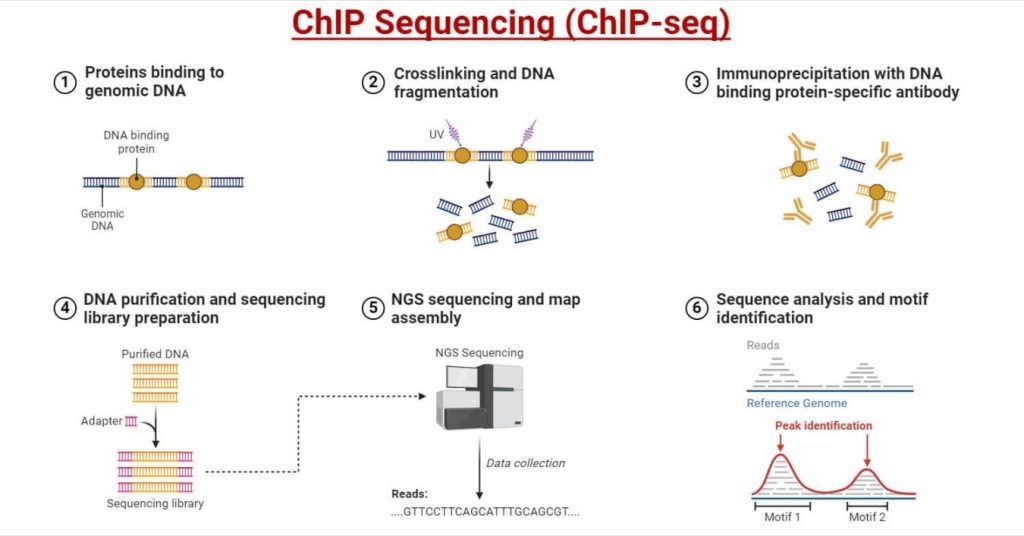
ChIP Sequencing (ChIP-seq): Principle, Steps, Uses, Diagram
Antibodies, Controls, and What "Good Enrichment" Looks Like
ChIP is an antibody-driven assay, so your target antibody and your controls define whether your data will be trusted.
Controls you should plan from day one:
✓ Input DNA (a fraction of chromatin before IP) to normalize recovery
✓ IgG control to measure non-specific pull-down background
✓ A known positive locus (if available) to confirm the system is working
Realistic enrichment expectations vary by target type. For example, some providers report that transcription factor/co-factor ChIP enrichments can be as low as ~0.5% of total input, while histone modification ChIP can be dramatically higher (tens of percent) depending on mark abundance and antibody performance; typical IgG background with beads can be around ~0.05–0.1% of input.
That range is not meant to intimidate you—it is meant to protect you from false expectations. In ChIP: Revealing How Proteins Control Genes, "small" can still be correct, as long as it is specific, reproducible, and above background with proper controls.
Longlight Technology CTA: If you are troubleshooting high background or weak signal, ask us for a control design template (primer strategy, input fraction planning, and background thresholds) so you can diagnose the bottleneck quickly.
ChIP-qPCR Vs ChIP-seq: Choosing the Right Readout for Your Goal
A beginner-friendly rule is: qPCR answers "Is it there?" while sequencing answers "Where else is it?"
ChIP-qPCR is ideal when you have a small set of suspected regions (promoters/enhancers) and you need fast iteration. It is also a practical stepping stone before investing in sequencing.
ChIP-seq is the choice for discovery and genome-wide mapping, but it requires planning for depth and quality metrics. ENCODE guidance provides commonly referenced targets such as:
For transcription factor / narrow-peak experiments: minimum ~10 million usable fragments per replicate, with higher recommended targets.
For broad histone marks: minimum ~20 million usable fragments per replicate, with higher recommended targets depending on goals.
These numbers are not just "sequencing advice." They shape how much starting material you need, how strict your antibody must be, and how carefully you must manage batch effects. That is why ChIP: Revealing How Proteins Control Genes is often won or lost at the design stage.
Qubit Assay Tubes and ChIP-Seq Service Advantage: One Workflow, One Standard
From Sample to Report
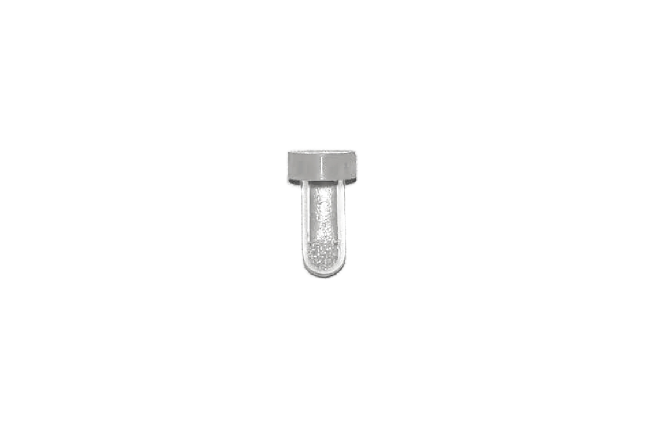
To make ChIP: Revealing How Proteins Control Genes practical for real research timelines, the workflow must stay consistent from sample intake to final interpretation. Longlight Technology pairs dependable consumables—such as Qubit Assay Tubes—with an end-to-end ChIP-seq service designed to reduce handoffs, control variability, and keep results easy to interpret for beginners and experienced teams alike.
One-Stop Service That Removes Bottlenecks
Our service model is designed for labs that want ChIP-seq outcomes without building a full sequencing pipeline in-house. You provide fixed cell samples or frozen tissue samples, and we complete the remaining steps with standardized checkpoints:
✓ Sample Preparation And Acceptance QC
✓ Chromatin Shearing And Fragmentation Control
✓ Library Construction And Library QC
✓ On-Instrument Sequencing And Data QC
✓ Bioinformatics Analysis And Structured Reporting
✓ Delivery Of Complete Reports And Raw Data
Strict Quality Inspection at Every Link
ChIP-seq depends on signal-to-noise performance. Subtle process variation in handling, shearing, or library metrics can dilute true signal. Longlight Technology implements tight QC controls throughout to enable confident enrichment and clear binding interpretation.
✓ Step-by-step QC to protect reproducibility
✓ Data quality checks that align experimental QC with downstream analysis
✓ Clean reporting that helps you locate binding at specific genes or regions with higher confidence
Suitable for Small Sample Sizes
Many research teams work with limited material, especially when studying primary cells, rare tissues, or early-stage samples. Our optimized experimental flow is designed to complete ChIP-seq experiments and analysis even when sample input is constrained.
✓ Process optimization for low-input projects
✓ Practical design guidance to avoid "rework loops" caused by insufficient QC
✓ Stable workflow to help small-sample studies remain interpretable
Targeted Questions: Specific Genes or Regions, or Genome-Wide Discovery
ChIP studies protein–DNA interactions in a way that reflects real chromatin context. ChIP-seq combines ChIP with next-generation sequencing to detect DNA sites bound by specific transcription factors or histones across the genome. Depending on your goal, our analysis can support both focused and discovery-driven work.
ChIP-seq can help you answer questions such as:
✓ Compare where a protein appears across sites and map binding in a target genomic region
✓ Explore how histone modification patterns relate to gene expression changes
✓ Identify precise positioning of RNA polymerase II and other trans-factor binding sites
✓ Study transcription factors to connect binding with regulatory outcomes
Why Choose Longlight Technology
Longlight Technology supports modern genomics with a practical product-and-service ecosystem. Alongside ChIP-seq services, we offer NGS-related instruments such as Focused Ultrasonicator, plus high-quality reagents and consumables used across academic, clinical, and industrial settings.
✓ Consumables And Kits: precast agarose gels, nucleic acid scavengers, Qubit tubes, nucleic acid extraction kits, and library preparation kits
✓ Genomics Solutions: products designed to improve lab efficiency, accuracy, and repeatability
✓ Research Support: workflow guidance that helps teams move from samples to usable conclusions
Final Takeaway
ChIP: Revealing How Proteins Control Genes works best when you treat it as a controlled system: stable chromatin prep, validated antibodies, honest controls, and a readout that matches your question. If you build the workflow with that logic, ChIP becomes one of the clearest windows into gene regulation you can use in a modern lab.
If you want, share your target type (TF vs histone mark) and sample format (cells vs tissue), and I can outline a beginner-friendly workflow checklist and QC points that fit your use case—still in the same clear, readable style.
