

Related Post

Magnetic Separator For Nucleic Acid Purification Explained: A Practical, Low-Noise Scale-Up Guide
2026-02-26Magnetic Separator For Nucleic Acid Purification is one of the most direct ways to turn a messy biological sample into clean, test-ready DNA or RNA—without making centrifugation the center of your workflow. At Longlight Technology, we build biomagnetic separation systems for teams who need purification that stays stable as volume, sample type, and daily throughput change. If you are new to magnetic bead methods, this guide walks through the logic in a clear order, then links the basics to the equipment details that matter in real operations.
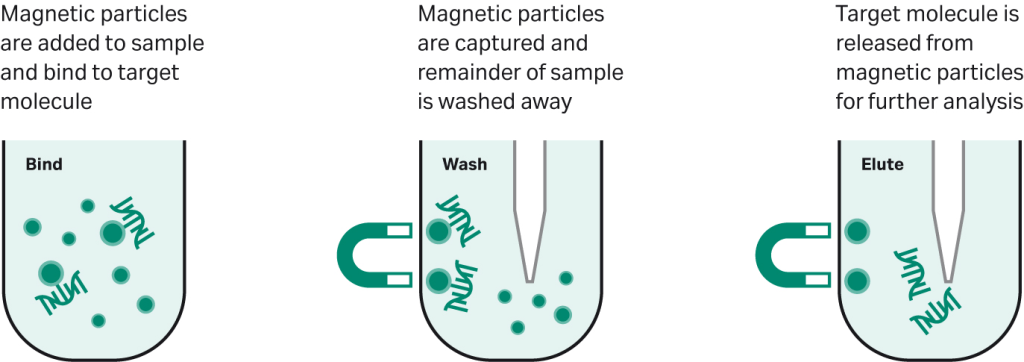
What is magnetic bead DNA extraction and how does it work?
Why Magnetic Bead Purification Solves More Than "Clean-Up"
Nucleic acid purification is often described as a single step, but in practice it is a chain of small decisions. You are not only trying to isolate DNA or RNA. You are also trying to remove proteins, salts, inhibitors, and residues that can quietly disrupt PCR, sequencing, or downstream reagent work. Many labs can get acceptable purity at low volume, then hit a wall when batches increase. At that stage, "good yield" is no longer enough. You also need repeatability, predictable timing, and a process that holds up across operators and shifts.
Magnetic beads became widely used because the method is inherently scalable. Instead of forcing liquid through filters or relying on spin columns and centrifugation, you let paramagnetic beads act as a controllable carrier. Under the right binding conditions, nucleic acids attach to bead surfaces. You then apply a magnetic field to immobilize beads while liquids move around them—supernatant removal, wash additions, and final elution.
A key point for beginners: the chemistry can be correct, and the process can still drift. In real production settings, drift usually comes from inconsistent bead capture, uneven washing, or bead carryover that slowly builds into variability. That is why a Magnetic Separator For Nucleic Acid Purification should be evaluated as a process stability tool, not just a "holder for magnets."
How a Magnetic Separator Works in a Bead Workflow
A Magnetic Separator For Nucleic Acid Purification mainly controls beads, not liquid. The beads carry what you want, and the separator makes bead movement and immobilization consistent enough that washing and elution become repeatable.
Here is the beginner-friendly logic you can memorize:
✅ Bind: Beads contact the sample and capture nucleic acids under binding buffer conditions.
✅ Collect: A controlled magnetic field immobilizes the bead–nucleic acid complex.
✅ Wash: You remove supernatant and add wash buffers while beads remain captured.
✅ Elute: You release nucleic acids into clean elution buffer, then separate beads again.
In a small tube, these steps can feel forgiving. In larger batches, "collect, wash, elute" must stay consistent across the working volume. If beads do not collect evenly or quickly enough, you may see incomplete separation, variable yield, or inconsistent inhibitor removal. Over time, those issues increase troubleshooting time and raise raw material loss.
This is why industrial users look beyond the phrase "strong magnet." They care about capture behavior across the entire working zone, separation time consistency, and how well the system maintains the same performance when volume changes.
Why Uniform Fields Matter More Than "Maximum Magnet Strength"
It is easy to assume that stronger magnets automatically improve purification. In practice, a stable and uniform field across the working area often matters more than peak strength in one spot.
When beads experience inconsistent magnetic forces, they tend to drift toward high-force zones and can form clusters. Clustering reduces effective surface contact, slows washing, and increases the chance that beads trap impurities that later enter the elution step. It also creates operational problems: bead clumps are harder to resuspend, harder to rinse away from vessels, and more likely to increase bead carryover.
Longlight’s design approach focuses on keeping beads in a more consistent force-field environment across the working area, so bead capture is steadier as batch volume and fluid geometry change. That helps reduce bead "gathering" and improves repeatability in daily use.
Practical outcomes of better field control typically include:
✅ More stable yield across different sample types and viscosities
✅ Cleaner washing with less bead carryover into elution
✅ Lower bead consumption because fewer beads are lost to clumps or handling errors
If you run frequent batches, these improvements are not cosmetic. They translate into fewer re-runs, less operator intervention, and more predictable batch-to-batch performance.
Scaling From Milliliters to Multi-Liter Batches Without Rewriting the Process
The binding principle does not change when you scale up. The risks do.
At larger volumes, small inefficiencies multiply. A tiny percentage of bead loss in a small tube may be acceptable. In multi-liter processing, it becomes a real cost line. The same is true for timing drift: a small delay in bead capture or a slightly less effective wash step can produce measurable yield variation across larger batches.
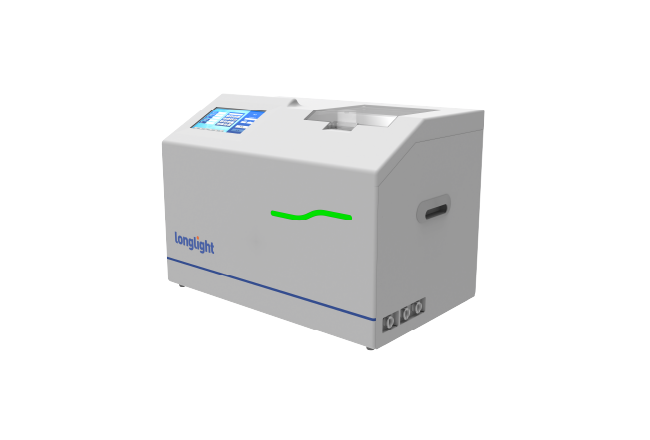
That is why a Magnetic Separator For Nucleic Acid Purification used for production should be designed for scale-up, not only lab convenience. Longlight’s MSG series biomagnetic separation systems are built to support batch operations from milliliters to tens of liters, including special-volume customization. The goal is simple: help teams scale throughput without redesigning the purification logic each time volume increases.
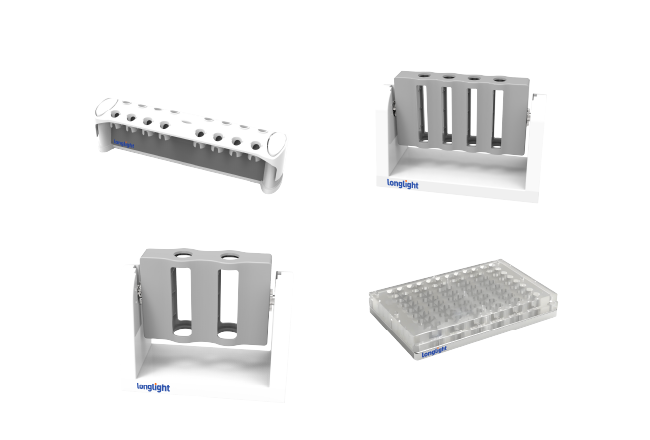
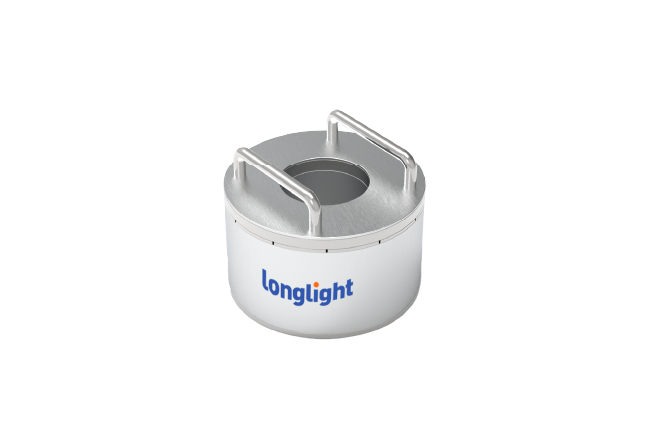
In scale-oriented equipment, concrete physical geometry matters because it influences flow paths, bead travel distance, and operator handling. For example, one MSG configuration includes an MSG-250 mL unit with defined dimensions (inside diameter 75 mm, outer diameter 179.5 mm, height 78 mm). In production environments, defined geometry supports standardization—fixtures, vessels, and handling routines become easier to replicate across different sites or lines.
When scale-up is planned correctly, you can validate one purification logic and extend it to higher throughput with fewer surprises.
Safety and Monitoring Become Non-Negotiable at Industrial Scale
In small-scale setups, magnets can be simple and exposed. At larger sizes, strong magnetic components introduce real safety concerns. Exposed large magnets can create pinch hazards and unpredictable tool movement near metal surfaces. In regulated facilities or high-throughput lines, that is not a "training issue." It is a design issue.
Longlight’s biomagnetic separation systems use a protection-focused design intended to reduce operator safety risks compared with traditional large-magnet handling. This supports safer daily operation, simpler onboarding, and higher confidence during repetitive batch work.
Monitoring is the second hidden requirement. In the real world, purification often fails quietly. You may not see a dramatic breakdown. Instead, you see subtle yield drift, incomplete capture, or gradual bead aggregation that becomes noticeable only after quality results shift.
That is why the MSG series integrates real-time monitoring to track separation performance continuously and support reproducible outcomes. Monitoring helps teams detect early signals and correct course before a batch becomes a quality event.
✅ Earlier visibility into bead aggregation or capture drift
✅ More consistent runs across operators, shifts, and sites
✅ Better documentation support for verification and quality assurance
If your downstream processes depend on consistent nucleic acid input quality, process visibility is what protects you from small deviations turning into repeated rework.
Turning Magnetic Separation Into Daily Efficiency, Not Extra Work
A Magnetic Separator For Nucleic Acid Purification is not purchased for a magnet rating. It is purchased for what it removes from daily operations: excess handling, unreliable runs, and time lost to repeat troubleshooting.
Longlight Technology develops MSG-series systems around practical outcomes. High bead capture efficiency is supported by optimizing separation time and conditions across different step volumes, using the paramagnetic properties of beads to control immobilization more precisely. The goal is reduced sample loss and more stable capture performance—especially valuable when samples are expensive, limited, or time-sensitive.
The systems are also designed to reduce dependence on centrifugation, which many teams experience as a throughput and training bottleneck. When centrifugation becomes optional rather than mandatory, workflows often become simpler and easier to standardize:
✅ Fewer handling steps with clearer, repeatable protocols
✅ Shorter processing time by streamlining separation and wash cycles
✅ Easier scaling through modular design and special-volume customization
As demand rises, verification and quality assurance cannot be added as an afterthought. They need to be supported by the equipment and the workflow design from the beginning. When purification is stable, teams spend less time "fixing" batches and more time producing consistent nucleic acid outputs for diagnostics, sequencing preparation, reagent development, or scale-up manufacturing.
CTA: If you are planning to scale from R&D runs to multi-liter batch purification, Longlight Technology can help you map target volume, vessel format, and process risks to an MSG-series configuration. Speak with us to evaluate application requirements and recommend volumes for scale.
