

Related Post

XL-MS: Mapping Protein Interactions Beyond Structure
2026-02-24XL-MS: Mapping Protein Interactions Beyond Structure is changing how we study protein behavior in real biological systems. Longlight Technology sees a common challenge across labs: you may know a protein’s "shape," yet still miss what truly drives function—who it binds to, where it contacts, and which interactions survive inside complex samples. XL-MS (chemical cross-linking coupled with mass spectrometry) is built to answer those questions in a practical, experiment-friendly way.
Toward Increased Reliability, Transparency, and Accessibility in Cross-linking Mass Spectrometry
What "Beyond Structure" Really Means in Practice
Mapping protein interactions beyond structure is not about rejecting structural biology. It is about completing it with interaction truth. In practice, this means you can answer questions that structure alone cannot:
1) Which Interactions Are Real In Complex Samples?
A purified structure may remove native partners. XL-MS can be applied to complex mixtures and still detect cross-linked peptide evidence that points to real proximities. This supports a more faithful interaction network—especially when many proteins compete, cooperate, or assemble in layers.
2) Which Contacts Survive Only Briefly?
Cross-linking agents can covalently connect two or more interacting proteins and retain short-lived or weak interactions. This matters when function depends on temporary docking—common in regulation, signaling, and multi-step enzymatic pathways. Mapping protein interactions beyond structure often reveals these "hidden" contacts as actionable leads for follow-up experiments.
3) Where Are The Likely Sites Of Action?
XL-MS reports do not only list "who binds whom." They can also indicate interaction sites by identifying cross-linked peptides. For beginners, this is a practical advantage: contact regions help you design mutants, truncations, or competition assays with a clear rationale.
What XL-MS Is and How It Works
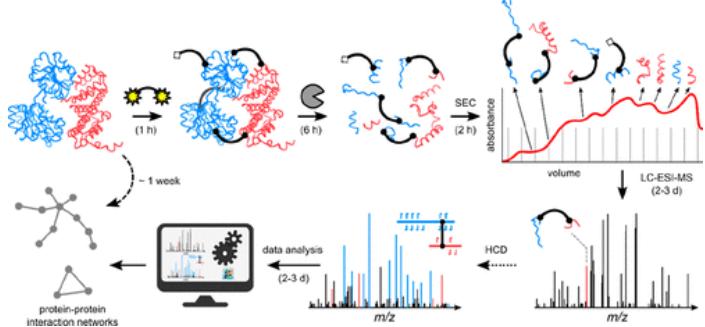
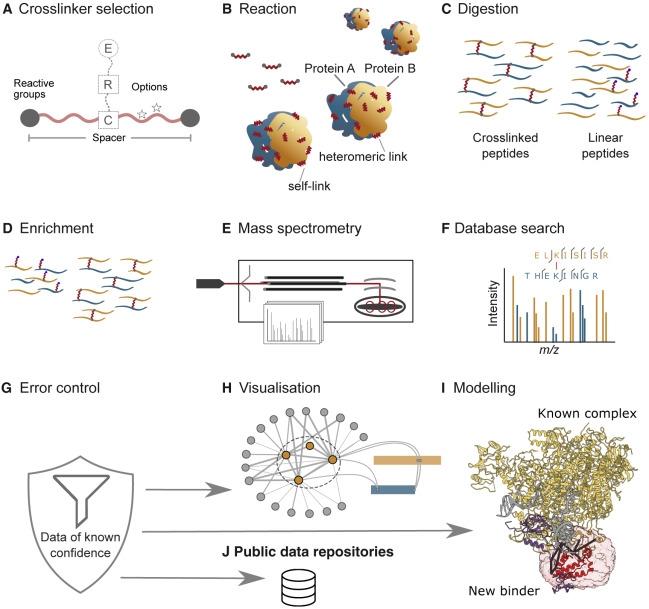
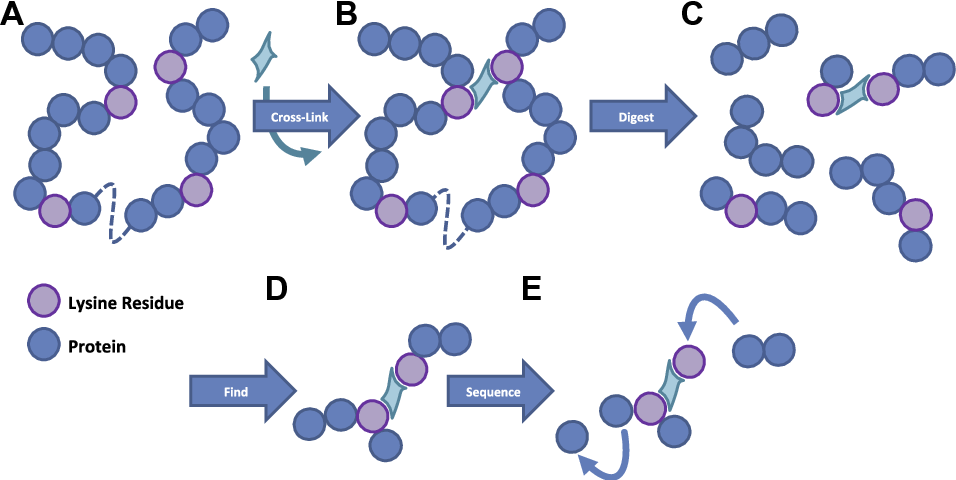
Chemical cross-linking coupled with mass spectrometry (XL-MS) examines PPIs by using cross-linking agents that covalently connect proteins (or protein regions) that are within a defined distance. After cross-linking, mass spectrometry analyzes cross-linked peptides, allowing you to map interaction networks and identify likely sites of action.
In simple terms, XL-MS: Mapping Protein Interactions Beyond Structure follows a clear logic:
✓ Lock interacting proteins in place using a chemical cross-linker (within a distance range)
✓ Digest proteins into peptides (enzyme digestion)
✓ Enrich and detect cross-linked peptides with mass spectrometry
✓ Analyze results to reveal interaction partners and contact sites
✓ Report interaction networks and actionable interpretation
Because cross-linking is covalent, XL-MS can preserve interactions that are easy to lose during purification or handling—especially short-lived or weak contacts that still matter biologically.
Longlight Technology's Advantages and What They Mean for Your Lab
When we talk about "advantages," we translate them into outcomes that help your project move forward. Longlight Technology designs XL-MS: Mapping Protein Interactions Beyond Structure as a workflow that fits real lab constraints.
• High Throughput and Fast Analysis Speed
If your project involves multiple conditions, mutants, or time points, speed matters. High-throughput and fast analysis allow you to compare interaction changes without waiting for long structural cycles. For many labs, this means moving from "one complex, one story" to "a tested interaction map across conditions," which supports stronger conclusions.
• Capturing Short-Lived and Weak Interactions
Cross-linking agents can covalently connect two or more interacting proteins and retain short-lived or weak interactions. Practically, this is valuable when you suspect a regulatory interaction that appears only under stress, stimulation, or a narrow time window. Instead of relying on a single pull-down that may miss the event, XL-MS provides a second path to interaction evidence.
XL-MS: Protein cross-linking coupled with mass spectrometry. | Semantic Scholar
• Intracellular Cross-Linking Options
Some interaction questions are only meaningful in a cellular context. XL-MS can undergo intracellular cross-linking, which helps you study complexes closer to their native environment. For beginners, the key idea is not "more complexity," but "more relevance"—the closer you are to native conditions, the more likely the interactions you detect reflect biology rather than sample handling.
• No Special Chemical Labeling Required
Many labs avoid workflows that demand extensive labeling steps. XL-MS does not require special chemical labeling of proteins, which reduces preparation burden and keeps the workflow approachable for teams that want a practical, scalable method rather than a highly customized pipeline.
Where XL-MS Fits With Cryo-EM and X-Ray Approaches
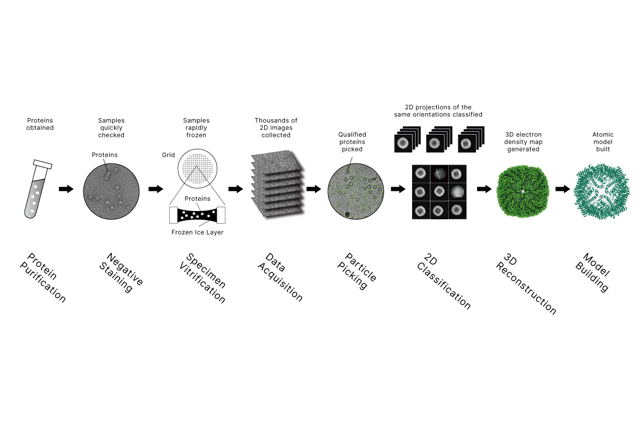
XL-MS: Mapping Protein Interactions Beyond Structure is not a replacement for cryo-EM or X-ray crystallography. It is a complementary tool that can guide and validate structural work.
For example, XL-MS can:
✓ Prioritize which protein partners belong in a structural model
✓ Add restraints that support complex assembly hypotheses
✓ Explain ambiguity when multiple conformations are possible
✓ Connect structure to function by highlighting contact regions linked to activity
If you are building a cryo-EM model and the complex is flexible, cross-link evidence can help confirm which subunits are truly adjacent. If you have an X-ray structure of a domain, XL-MS can reveal how that domain interfaces with partners in a larger assembly.
Longlight Technology Service Process: Clear Inputs, Complete Outputs
A common reason XL-MS projects stall is not the science, but the workflow coordination. Longlight Technology keeps XL-MS: Mapping Protein Interactions Beyond Structure straightforward for customers.
You can choose either path:
✓ Send Cross-Linked Samples you have already prepared
✓ Co-Develop A Cross-Linking Plan with our team, then send samples
From there, we complete the full process: enzyme digestion, peptide enrichment, mass spectrometry detection, data analysis, and delivery of the experimental report. This end-to-end approach helps you avoid gaps between sample prep, instrument methods, and interpretation.
CTA: If you want to test whether XL-MS can clarify your complex or validate suspected PPIs, contact Longlight Technology for a free quote and a practical cross-linking plan aligned with your sample type and research goal.
Building a More Complete Research Toolkit With Longlight
Modern protein interaction research rarely lives in one technique. Labs need methods that connect genomics, functional assays, and structural biology into one decision system. Longlight Technology supports that broader toolkit with cutting-edge genomics solutions, laboratory instruments, and reagents designed to improve research efficiency and accuracy across academic, clinical, and industrial workflows.
For teams working across multiple layers of biology, we also support areas such as:
✓ ChIP-Seq Workflows to study DNA–protein interactions in chromatin contexts
✓ NGS-Related Instruments And Consumables including Focused Ultrasonicator solutions used in genomics workflows
✓ Consumables And Kits such as nucleic acid extraction kits and library preparation kits for routine and scalable lab needs
XL-MS: Mapping Protein Interactions Beyond Structure fits naturally into this ecosystem. It helps you move from isolated measurements to connected evidence: interaction networks, contact sites, and practical clues that guide the next experiment.
CTA: Ready to map interactions with clearer confidence? Get a free quote from Longlight Technology and let’s turn your interaction question into a complete XL-MS workflow—from plan to report.
